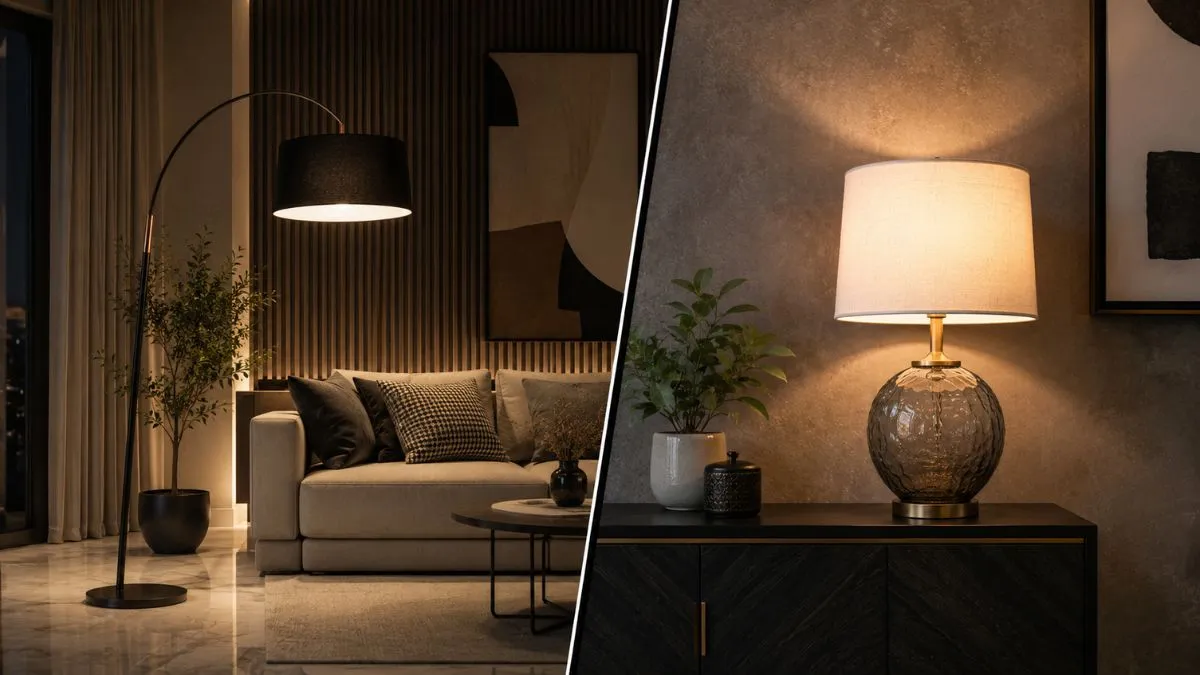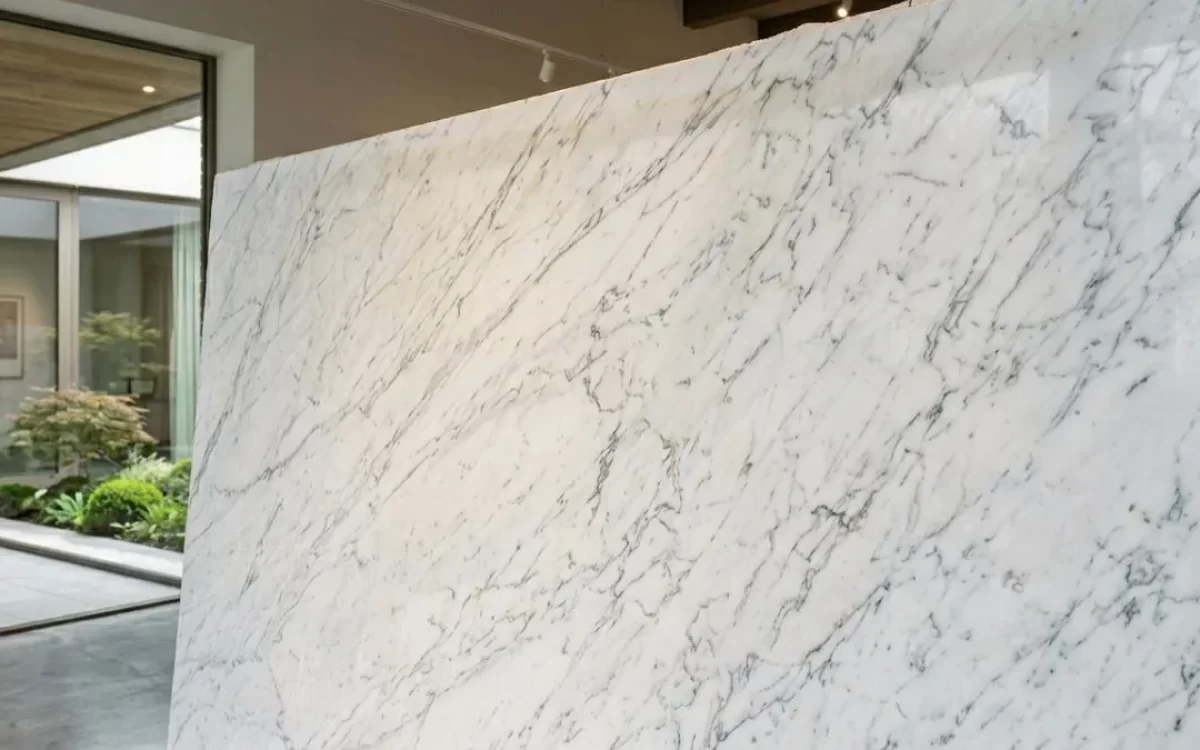
What is Italian marble and why does it hold such a strong reputation in Indian luxury homes? In this blog, we break down its origin, types, features, and practical uses in simple terms. If you are planning a premium home or advising a client, this guide will help you make a confident and informed decision.
Many homeowners ask what is Italian marble and whether it truly deserves its price tag. The answer lies not just in beauty, but in heritage, performance, and long-term value.
The Origin and Legacy of Italian Marble
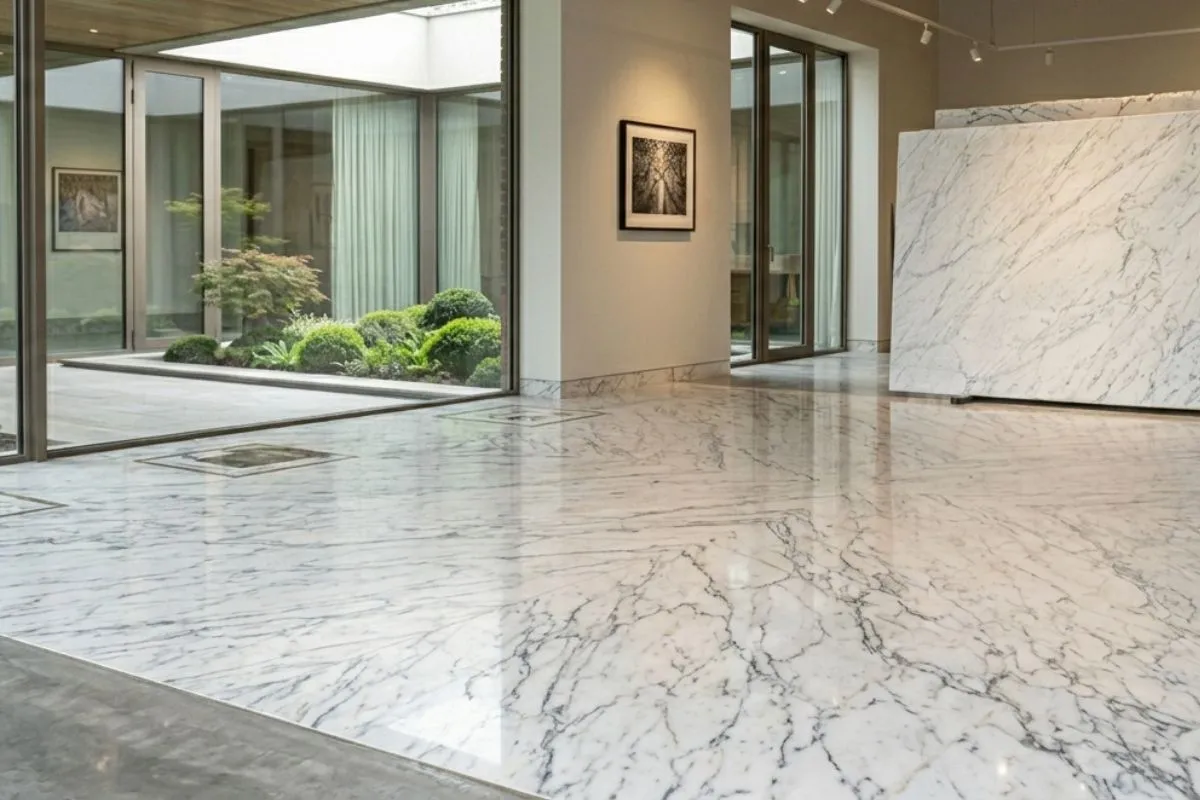
To understand its appeal, we first need to explore where it comes from and how it became a global symbol of luxury.
Italian marble is quarried from regions like Carrara, Tuscany, and Sicily in Italy. For centuries, it has been used in iconic sculptures, cathedrals, and palaces across Europe. In India, it gained popularity during the luxury real estate boom, where premium materials became a sign of refined taste.
Understanding what Italian marble is begins with its geography. The natural pressure and mineral composition of Italian mountains create marble that is fine-grained and consistent in colour. This gives it a soft glow that many other stones struggle to match.
Because of this heritage, it is often seen as a status symbol in Indian homes. It reflects aspiration, travel, and global exposure. And that emotional connection plays a big role in its demand.
As we move ahead, let’s look at the specific types that are most popular in India.
Italian Marble that is Popular in India
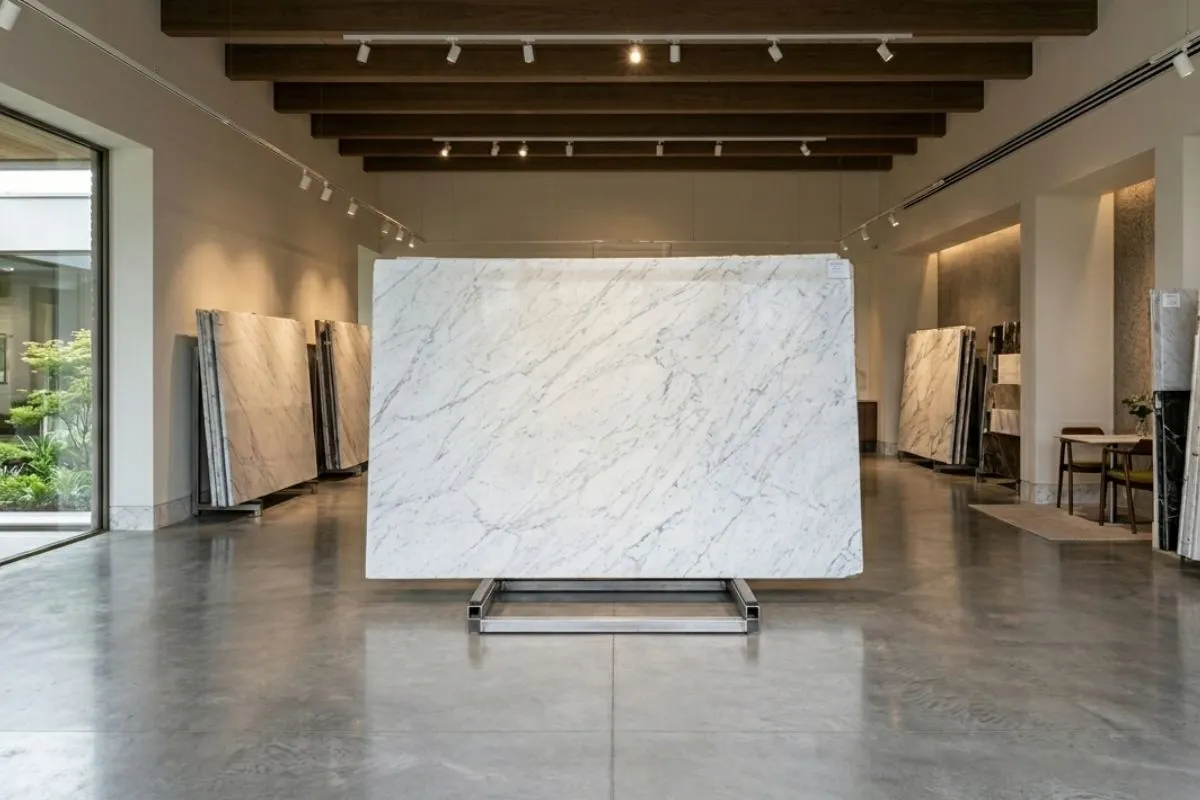
There are many options to choose from when it comes to selecting a marble slab but it is important to know the differences in types first.
1. Statuario Marble
Statuario Marble is bright white in color with big grey veins. It is rare to find and luxurious. It is best suited for large living spaces so the vein patterns can be appreciated.
2. Carrara Marble
Carrara has a white background but the veins appear softer and are a light color rather than grey. It is more affordable than Statuario and is commonly used for flooring and the walls in bathrooms.
3. Botticino Marble
The bottom of the marble is beige which gives it a warm appearance. It is best suited for Indian interiors that have earthy colors in a classic theme.
When clients ask What Is Italian Marble, they are often surprised to see how many different options are available. Each type has its own look, making it easier to match with different design styles.
In many Indian projects, buyers also ask if the slab is available in pre-polished form and if 20mm thickness is suitable for their needs.
Now that we know the types, let’s understand the features that make this stone special.
Key Features That Define Italian Marble
To simplify the question further, we need to understand the durability, maintenance, and beauty of the marble.
- Natural Lustre: While Italian marble does shine, once finished, the effect of the marble will create the illusion of a brighter and bigger room.
- Fine Grain Structure: The fine and exclusive marble of Italy ensures a smooth and royally finished floor.
- Porosity:
- Italian marble is a bit more porous than some types of marble.
- Moisture can be absorbed if the surface isn’t sealed regularly.
- This can be further controlled by professional installation.
- Durability: Italian marble is softer than granite, so it feels more like marble and less like granite. Italian marble is easy to take care of. It lasts for a long time and can be polished again to restore its shine.
A lot of premium residential projects in India also prefer pre-polished slabs because they offer a more finished look at the selection stage, while 20mm is a commonly discussed thickness for flooring and other interior applications.
When the question is what Italian marble is, the debate settles with all the amazing features of Italian marble. However, drop the marble and we lose all of it’s amazing features.
Pre-Polished Finish and 20mm Thickness in Italian Marble
Pre-polished Italian marble is often preferred in premium residential projects because it allows buyers, architects, and designers to assess the surface finish, shine, and visual appeal more accurately before installation. It also helps in making faster material approvals since the final look is easier to understand at the selection stage.
20mm thickness is commonly considered for Italian marble in several interior applications because it offers a practical balance between strength, stability, and finish.
In Indian homes, it is often discussed during planning for flooring and other internal surfaces where both durability and a refined appearance matter.
Uses of Italian Marble in Modern Indian Homes
Once you understand what Italian marble is, its applications become clear. It is not just for flooring; it adds character to multiple surfaces.
1. Flooring
Italian marble flooring creates a seamless and luxurious look. Large slabs with minimal joints give homes a premium finish.
2. Wall Cladding
It works beautifully for feature walls in living rooms or bedrooms. The veining becomes a design element rather than just a surface.
3. Countertops and Tabletops
Though granite is harder, Italian marble is chosen for dining tables and statement kitchen islands where aesthetics are a priority.
4. Staircases and Lobbies
In duplex homes and villas, marble staircases instantly elevate the visual appeal.
For buyers planning execution, 20mm slabs are often considered for flooring because they offer a practical balance between strength and finish, and pre-polished material can help visualise the final surface better before installation.
When discussing what Italian marble is, its versatility stands out. From subtle elegance to bold statement pieces, it adapts well to different scales of design.
Let’s now compare it with other materials to help you decide better.
READ ALSO: Why Italian Marble Is Best for Luxury Homes
Italian Marble vs Other Flooring Options
When clients compare materials, the question of what Italian marble is often comes up alongside cost and performance comparisons.
| Feature | Italian Marble | Indian Marble | Granite |
|---|---|---|---|
| Appearance | Premium, soft veins | Varied patterns | Speckled, uniform |
| Shine | High natural lustre | Moderate | High but harder look |
| Porosity | High (needs sealing) | Moderate | Low |
| Cost | Expensive | Affordable | Mid to high |
| Maintenance | Regular care needed | Moderate care | Low maintenance |
This comparison shows that Italian marble is preferred more for its beauty and premium look than just for practical use. Your final choice should match your daily needs along with your design and style goals.
Conclusion
For an Indian homeowner, understanding What Is Italian Marble helps see that it is not just a surface, but a smart investment for long-term beauty and value. It can increase resale value and attract more buyers. Many people prefer it for a luxury finish because it makes spaces look brighter, cleaner, and more modern. Even though maintenance can be expensive, the overall look and value it adds make it worth it.
Italian marble is a premium choice and offers good value for money. If you are building your forever home, it is a great option to consider.
FAQ’s
1. What kind of maintenance is required for keeping Italian marbles?
Italian marbles require gentle cleaning and regular sealing. Also, avoid the use of harsh acids and get your marbles professionally polished every few years.
2. What is the reason for the higher prices of Italian marbles compared to Indian marbles?
Because of the transportation costs, imported Italian marbles are more expensive.
3. What is the procedure for determining the authenticity of the product?
You can request invoices from suppliers. These invoices can help you in determining the origin.
4. Is it okay to use Italian marbles in the Indian climate?
Yes, Italian marbles are okay for use in Indian climate, but to handle moisture and spills, sealing is a requirement. With proper sealing, Italian marbles can work in Indian homes.