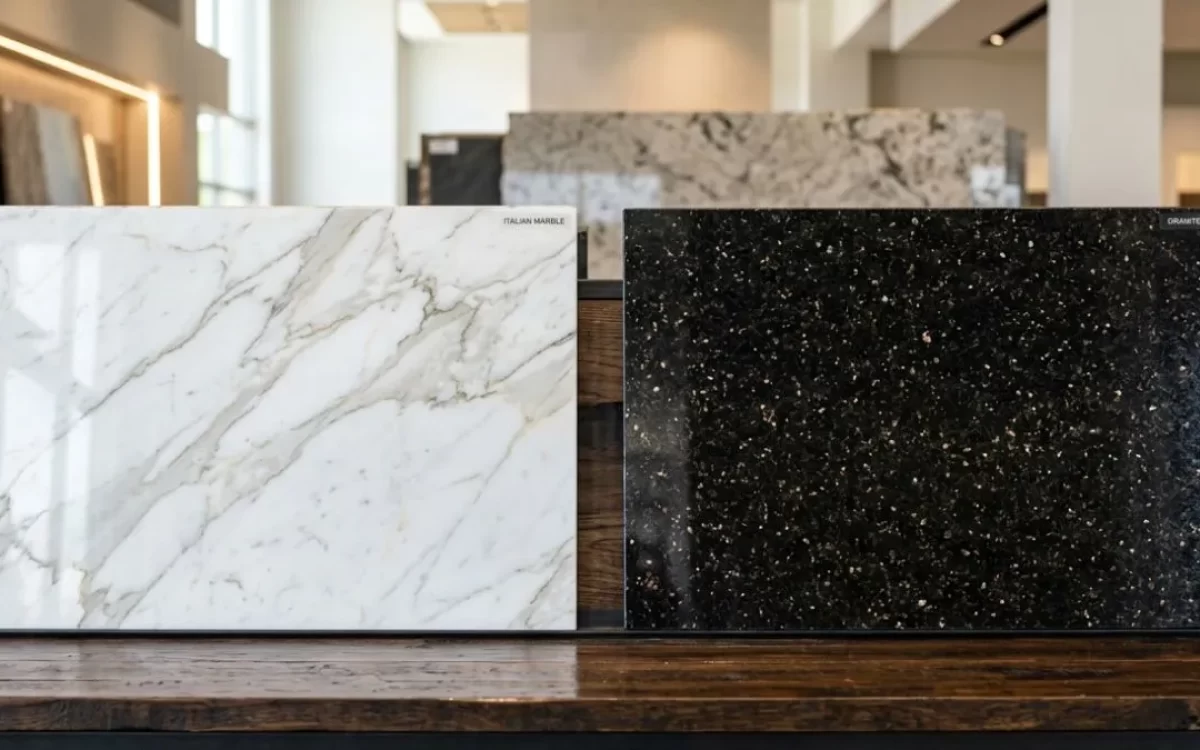
Choosing a kitchen countertop in an Indian home is never a small decision. It is the main place used every day. Morning chai starts here. Lunch preparation happens here. Hot kadhais are kept here without thinking twice. Haldi spills. Oil splashes. Pressure cookikers keep moving around. Slowly, the kitchen stops looking like a showroom and becomes a real working space.
That is why knowing the marble and granite difference is so important. It is not only about looks. It is also about how your kitchen feels after one year, five years and ten years.
Why This Comparison Matters in an Indian Kitchen
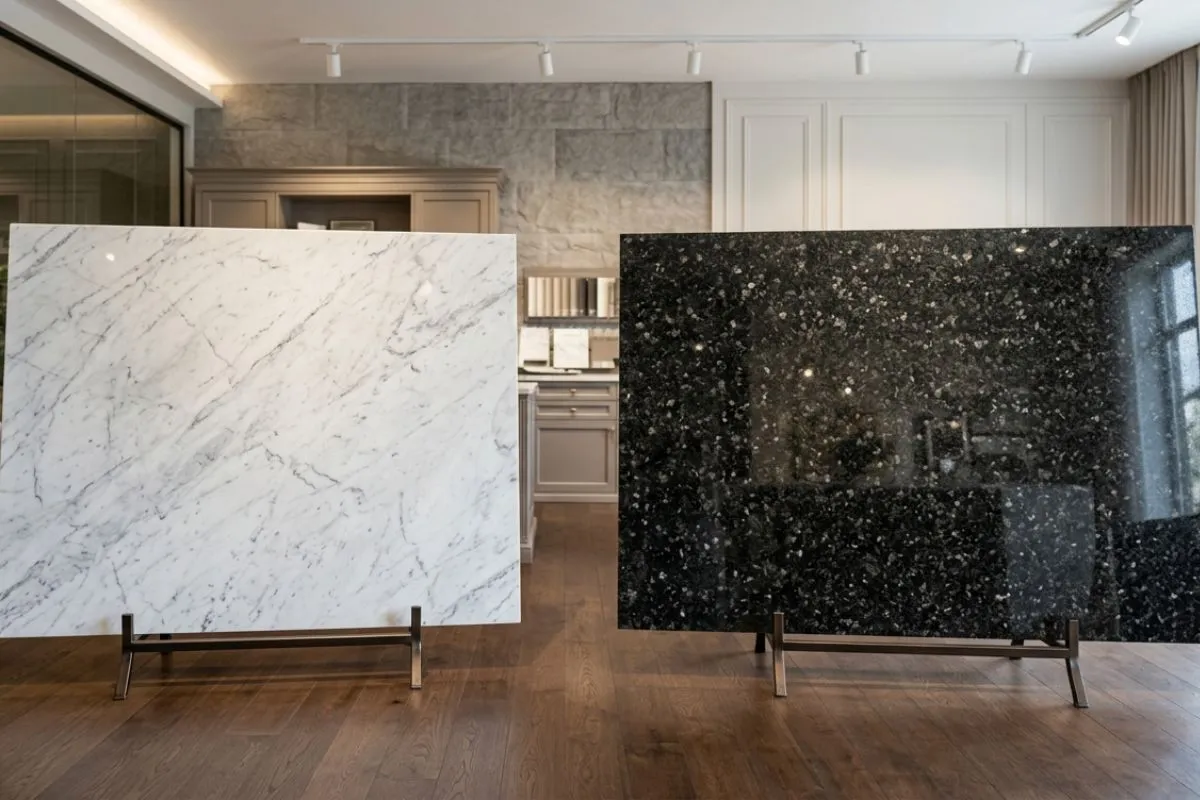
Most homeowners begin with colour and finish. That is natural. A beautiful slab can change the entire mood of a modular kitchen. But design alone cannot decide the right surface. The real question is how the material behaves under Indian cooking habits. The marble and granite difference becomes obvious when the countertop starts facing masalas, hot utensils, spilt tea, lemon juice and constant wiping.
Indian kitchen aesthetics often favour rich natural stone because it adds depth, warmth and a sense of permanence. Marble brings softness and quiet luxury. Granite feels grounded, strong and practical.
Top 5 Differences Between Marble and Granite
1. Durability Comparison
Let’s get straight to it. Granite is the tougher material in most kitchens. That is the biggest marble and granite difference from a performance point of view.
Granite has better scratch resistance and stronger stain resistance when sealed well. It handles rough use better. It also performs more confidently in busy family kitchens where cooking happens two or three times a day.
Marble is durable, too but it is softer and more porous. That one point changes everything. The marble and granite difference in porosity means marble absorbs liquids faster if the surface is not sealed and maintained properly.
“Over time that can lead to dull patches, stains and etching from acidic ingredients like lemon, tomato and vinegar.”
When we look at the numbers granite usually wins for long-term wear. Marble can still work beautifully but only when the homeowner is ready for better countertop maintenance and a little more patience.
2. Appearance Comparison
Now comes the emotional part.
Marble has a certain grace that granite rarely matches. Its veins feel fluid and elegant. It suits homes that want a softer, more premium finish. For many people, the marble and granite difference begins with this visual appeal. Marble feels luxurious in a quiet understated way. It can make even a compact kitchen look refined.
Granite has a denser pattern and a stronger visual character. It often suits modern modular kitchen layouts because it feels sharp, bold and dependable. In darker shades, it also hides marks better. This is another practical marble and granite difference that Indian families appreciate once daily cooking begins.
The right choice depends on the mood of the home. For timeless light-toned Indian kitchen aesthetics marble can be stunning. For a more hard-working and fuss-free visual language granite usually fits better.
3. Heat Resistance
Indian kitchens are not gentle spaces. A hot tawa may be placed down for a few seconds. A kadai comes off the flame and lands on the counter edge. Steam heat and oil are constant. Here again, the marble and granite difference matters.
Granite generally offers better heat resistance for regular kitchen use. It handles high temperatures more confidently and is less likely to show damage from occasional heat exposure. Marble can also tolerate heat but repeated direct contact with very hot cookware is not ideal. That is an important marble and granite difference for homes where heavy kadai cooking is routine.
The reality is simple. If your kitchen sees serious daily use granite gives you more peace of mind.
4. Stains and Maintenance
Ask any Indian homeowner what they fear most in a white or light counter and the answer comes fast: haldi. Turmeric can leave stubborn marks and this is where the marble and granite difference becomes impossible to ignore. Because marble has higher porosity, it is more vulnerable to haldi stains especially if spills sit for too long. Even with sealing, it needs fast cleanup.
Granite performs better on stain resistance especially in darker finishes. It is not fully stain-proof but it is more forgiving. That makes the marble and granite difference very relevant for families that cook rich, masala-heavy food and tadka almost every day.
Countertop maintenance also differs. Marble needs more frequent sealing and gentler cleaning habits. Granite is lower maintenance in comparison. So if you want beauty with less stress the marble and granite difference points clearly toward granite.
5. Cost Comparison
Marble pricing varies wildly based on origin, finish and slab quality. Some Indian marbles are budget-friendly while premium imported options can rise sharply in cost. Granite is also available across price bands but often offers better value in high-use kitchens. That is another key marble and granite difference.
Initial cost should never be the only deciding factor. Think about polishing, sealing, repairs and the stress of living with a surface that marks easily.
In that bigger picture, the marble and granite difference is not just about the buying price. It is about ownership experience.
READ ALSO: The Top 5 Italian Marble Companies in India
Conclusion
From our perspective, the answer is clear for most Indian homes. If the kitchen is used heavily and you want strength, better stain resistance, lower porosity and easier countertop maintenance, choose granite. It handles haldi spills, heavy cooking and daily wear with less drama. This is where the Differences Between Marble and Granite become clearly visible in daily use.
Choose marble only if visual softness is your top priority and you are comfortable with extra care. For a show kitchen, marble can be beautiful. For a true Indian working kitchen, granite is usually the smarter slab.
FAQ’s
1. Which is better for Indian kitchen counters, marble or granite?
For most Indian kitchens, granite is the better option because it has better stain resistance, heat resistance and lower porosity. It is easier to live with during daily cooking.
2. Does marble stain more than granite?
Yes. Marble is more porous so haldi oil and acidic ingredients can mark it faster if not cleaned quickly. Granite is usually more forgiving after proper sealing.
3. Can marble or granite be used for flooring as well?
Both can be used for flooring depending on the design intent and budget. Marble flooring feels classic and elegant while granite flooring is harder and better for high-traffic zones.
4. Are these stones available in vaastu-compliant options?
Yes. Both marble and granite come in colours and finishes that can align with vaastu-compliant options. The choice usually depends on direction colour preference and the overall home palette.